Existential distress
How to Change Your MindExistential distress is the interwoven depression, anxiety, and fear that can arise when a person confronts a terminal diagnosis. In the book, it is more than a cluster of symptoms: the prospect of death can contract a person’s emotional and mental world, sever the felt connection to others, and make questions of meaning urgent. Psilocybin-assisted therapy enters this account not simply as symptom relief, but as a possible interruption of that contraction—one whose encouraging clinical results also raise questions about how experience, meaning, and treatment relate.
Definition and the Crisis of Meaning
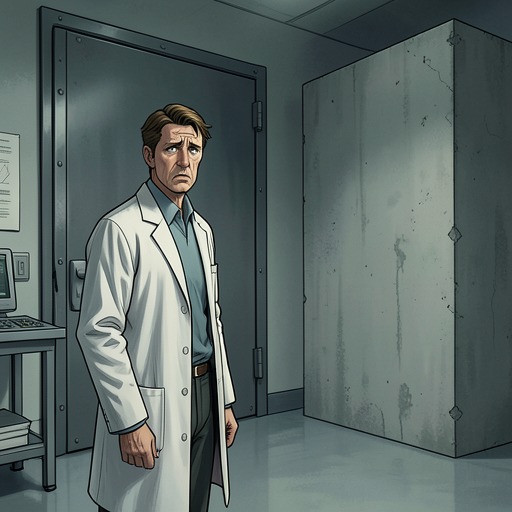
A diagnosis of terminal cancer can become a crisis of meaning as well as a medical fact. The questions it provokes—why this person, why this fate, and whether life or the universe makes sense—can shrink the horizon of attention. Rumination and worry then occupy more of the mind, reinforcing patterns that become increasingly difficult to leave. Patients interviewed in connection with the research described feeling closed off from loved ones and from the wider world, sometimes characterizing the condition as existential loneliness.
The book connects this narrowing to features associated with a hyperactive default mode network: repetitive self-reflection and difficulty escaping negative thought. Faced with its own extinction, the ego may turn inward and become hypervigilant, withdrawing attention from other people and from the world. This account treats existential distress not as an abstract fear of death alone, but as a lived restriction of attention, feeling, and relationship. Its opposite is therefore not merely the absence of anxiety; it may involve recovering a sense of connection and a wider context in which to understand one’s life.
Psilocybin Trials and the Evidence
The clinical work described in the book aims to test whether a single high dose of psilocybin can relieve the anxiety and depression that often follow a life-threatening cancer diagnosis. At New York University, the treatment took place in a carefully prepared room within a hospital setting, and Tony Bossis guided Patrick Mettes during a six-hour session. The trial formed part of a small renewed effort to investigate psychedelic therapy after sanctioned research had ended in the 1970s. Stephen Ross, who directed the New York University trial, came to this work after discovering that earlier psychedelic treatment research had largely disappeared from psychiatric education and memory.
In December 2016, results from the New York University and Johns Hopkins University cancer studies were published together. Across the two trials, about 80 percent of patients showed clinically significant reductions in standard measures of anxiety and depression, and those effects lasted at least six months after the session. The intensity of participants’ reported mystical experiences closely correlated with the extent of symptom reduction. The book emphasizes both the scale of that signal and its limits: the studies included eighty subjects in all, and larger trials would be needed before regulators could consider rescheduling psilocybin and approving the treatment. The findings encouraged further research and attracted interest from medical schools and funders, but they did not settle why the intervention appeared to help.
The reported correlation also resists a simple explanation. Some experiences involved thoughts about an afterlife, but others did not; one volunteer understood survival in naturalistic terms, as matter returning to the earth and entering the roots of trees. The book therefore presents the findings as evidence that demands explanation, not proof that one spiritual interpretation accounts for every outcome. Nor does the association alone establish which elements of the session—drug, experience, preparation, therapeutic relationship, or some combination—produce relief.
Mettes and the Lifting of Fear
Mettes’s story gives the trial a particular human shape. In April 2010, three years after his diagnosis of bile-duct cancer, the fifty-three-year-old television news director read a front-page New York Times report about renewed research into psychedelics and cancer-related existential distress. His cancer had spread to his lungs, and the demands of chemotherapy and the possibility that he might not survive weighed heavily on him. Although he had no prior experience with psychedelics, he contacted New York University and volunteered for the study.
His wife, Lisa Callaghan, initially opposed the decision because she wanted him to keep fighting rather than seek what she feared might be an easy way out. Mettes nevertheless enrolled and was assigned to Bossis; the two quickly established a rapport. During the session, after a long period of silence, Mettes began to cry softly and spoke twice about the labor of birth and death. Bossis described the experience as a moment in which Mettes seemed to be in the room and also in the presence of something larger. The account does not reduce the session to a dramatic cure; it shows a guided experience in which the terror surrounding death appeared to loosen.
That possibility mattered to Bossis because, as a palliative-care specialist, he saw how few psychiatric tools directly addressed existential distress. Conventional medication, in his view, did not answer the whole problem. The question posed by the trial was whether an experience that could recalibrate a person’s relation to dying deserved careful investigation. Mettes’s session supplies a vivid case within that inquiry, while the larger studies—not one individual account—provide the reported clinical measurements.
Meaning, Connection, and Interpretation
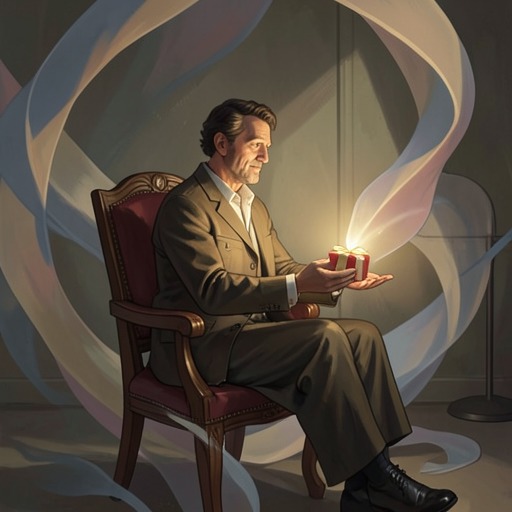
Interviews with patients identified a recurring movement from separateness toward interconnectedness, often accompanied by joy, bliss, or love. Difficult passages during sessions could be followed by surrender and acceptance, including greater acceptance of illness. These reports help explain why the book treats meaning as central to the New York University therapists’ approach: a terminal diagnosis can isolate a person inside repetitive questions, while a changed sense of relation may open those questions to a wider emotional and social world.
Jeffrey Guss interprets this change through psilocybin’s egolytic effects. If the ego helps maintain boundaries between conscious and unconscious material, and between self and other, then the temporary loosening of those boundaries may permit new meanings to emerge and make rigid patterns of thought less compelling. The book also raises a possible connection to neuroscience: when the default mode network disintegrates, overall brain connectivity increases, allowing regions that do not ordinarily communicate to form new connections. Whether such changes explain the reported meanings remains an open question, not an established mechanism.
The account also acknowledges that meaning may be shaped by expectation and guidance. Before sessions, Guss prepares patients to consider that the medicine may disclose unfamiliar aspects of themselves and help them understand life and existence, while avoiding a fixed definition of what a transcendent experience must be. The therapeutic setting is therefore part of the question, not incidental scenery. The author’s wider discussion of psychedelic practice likewise stresses protocols and trained guides; powerful experiences are not automatically safe or useful simply because they feel significant.
Significance and Limits
For the book, the potential value of psilocybin in existential distress lies in its capacity to make experience feel purposeful and consequential, including for people without religious faith. A sense of oneness with nature or of universal love can place the self within a larger frame and make the prospect of its extinction easier to contemplate. This is presented as a possible humanistic or spiritual interpretation of reported experience, not as a claim that the trials establish what happens after death. Even Roland Griffiths, while remaining open to mystery, treats such questions as questions rather than conclusions.
The early cancer-trial results thus join two registers without resolving the tension between them: measurable reductions in anxiety and depression, and accounts of experiences whose authority and meaning remain disputed. The studies made renewed inquiry possible and suggested that a single carefully supported session might have lasting effects, but their small scale left important work ahead. Existential distress remains at once a clinical challenge and a crisis of meaning; the book’s argument is that research can investigate the relief people report without pretending that measurement has exhausted what those experiences mean.